
Most problems with HMRC don’t start with big fraud.
They start with small assumptions.
Someone told you an expense was “fine”.
You saw it on social media.
Your mate’s been claiming it for years.
And then a letter lands.
The issue usually isn’t what you claimed.
It’s why you claimed it and how well you can explain it.
Let’s clear this up properly.
What HMRC actually looks at
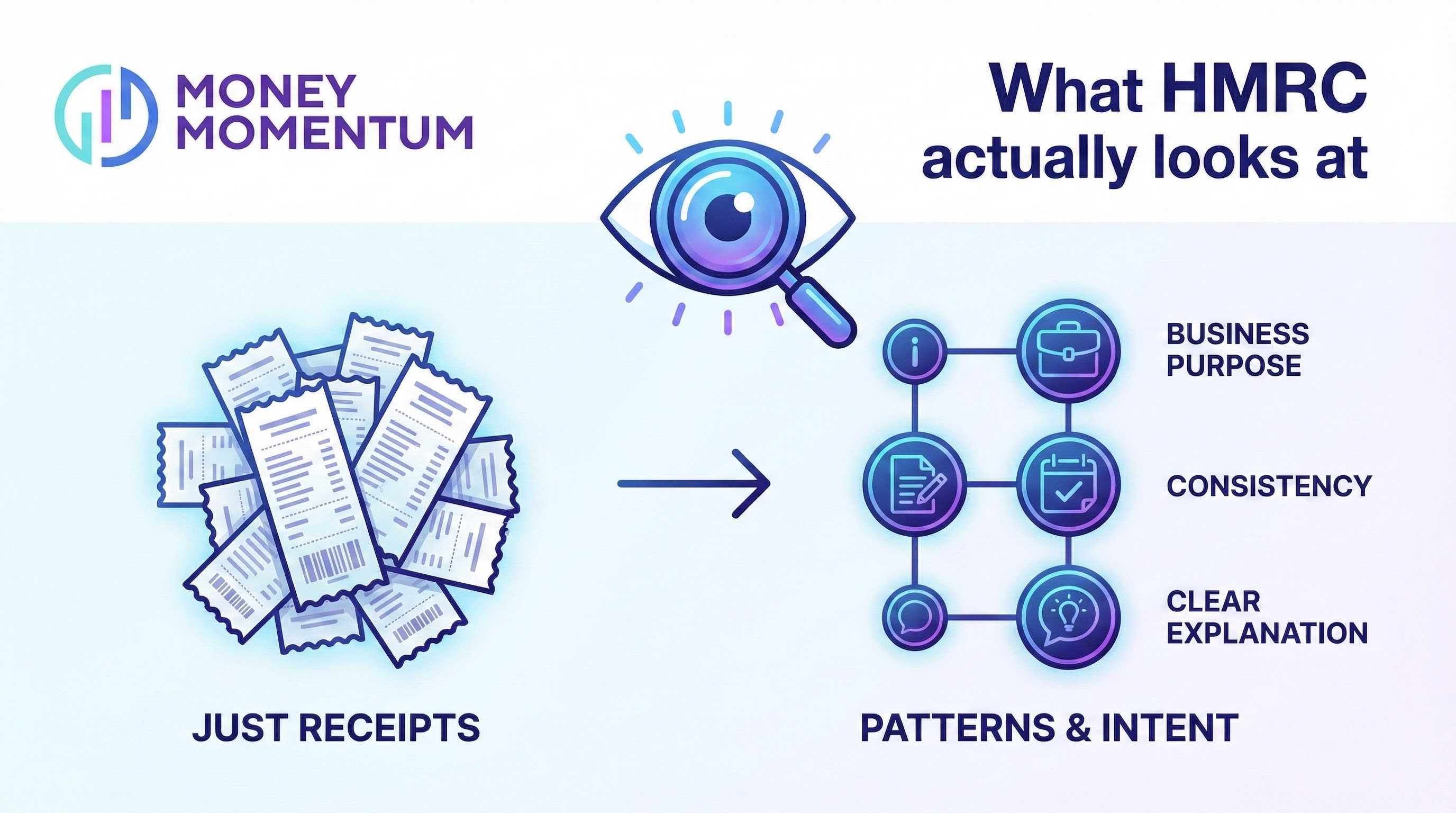
HMRC isn’t scanning your return looking for fancy categories.
They’re looking for patterns and intent.
In simple terms, they ask:
-
Is this expense wholly and exclusively for business?
-
Does it make sense for this type of business?
-
Is it consistent over time?
-
Can it be explained clearly?
If the answer feels vague, that’s where trouble starts.
Expenses HMRC rarely has an issue with
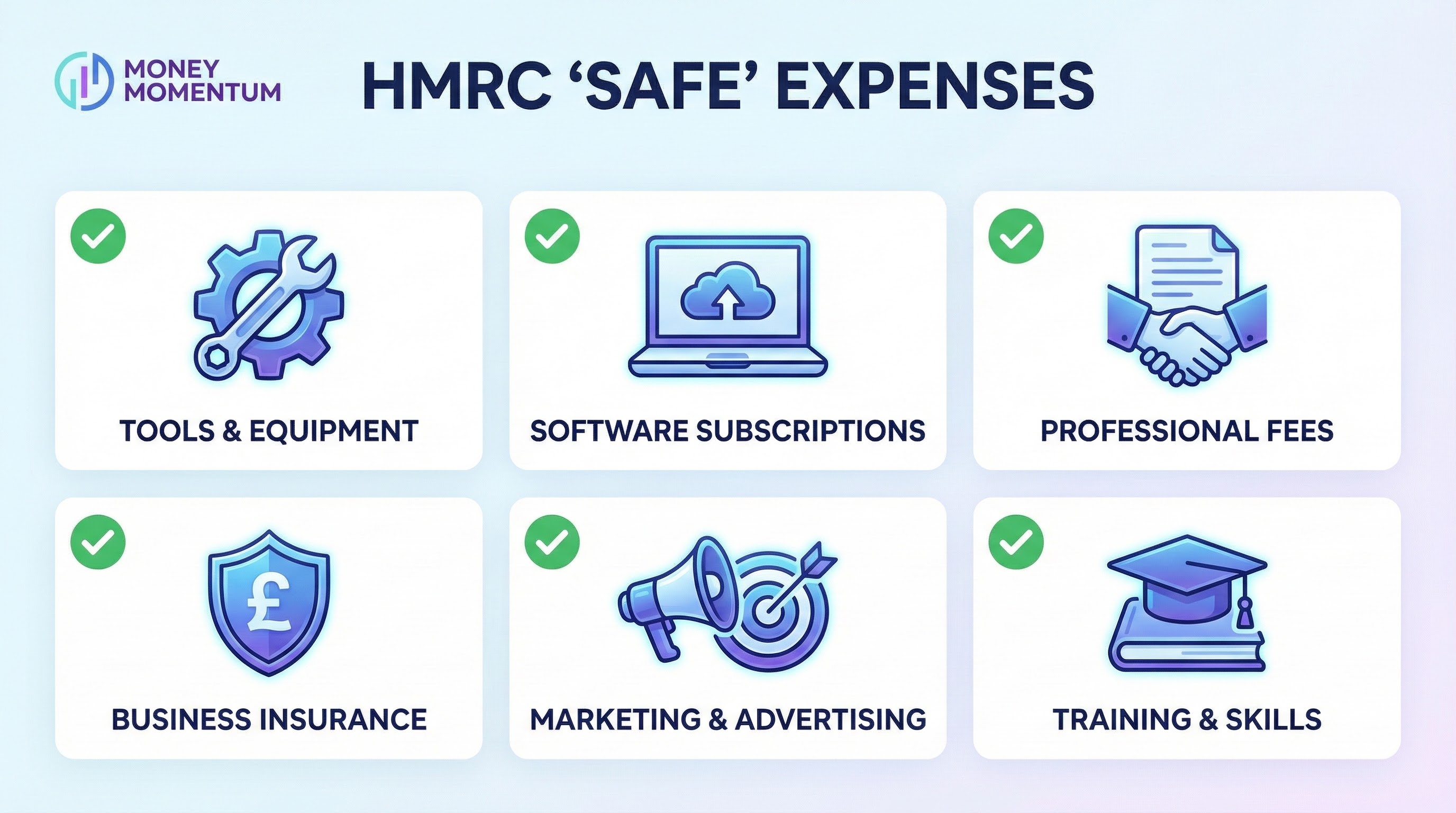
These are usually fine when they’re clearly business-related and properly recorded.
-
Tools and equipment you genuinely need for your work
-
Software subscriptions used for business
-
Professional fees like accountancy or legal advice
-
Business insurance
-
Marketing and advertising
-
Training that maintains or improves existing skills
These expenses have a clear link to earning income. That’s why HMRC is generally comfortable with them.
The expenses that often trigger questions
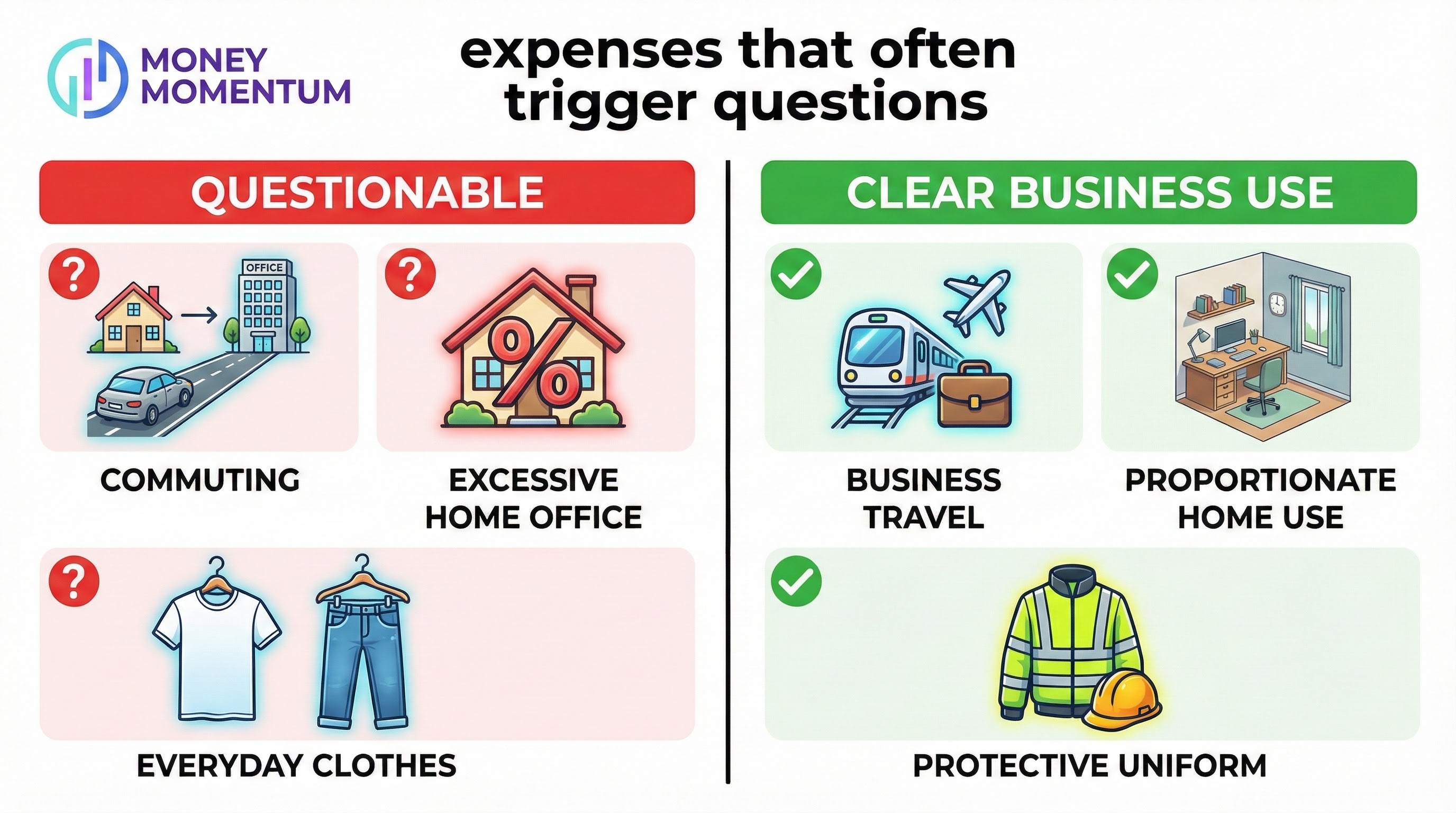
This is where people get caught out.
Travel and mileage
Business travel is fine.
Commuting is not.
Driving from home to a regular place of work is usually classed as personal travel, even if you’re self-employed.
This catches a lot of people off guard.
Home office costs
Yes, you can claim something.
No, you can’t suddenly put half your rent through the business.
HMRC expects claims to be reasonable and proportionate.
Trying to stretch this is one of the quickest ways to invite questions.
Meals and subsistence
A coffee while working locally is usually not a business expense.
Food while travelling for work can be.
The context matters more than the receipt.
This is an area HMRC watches closely because it’s easy to blur personal and business spending.
Clothing
If you could wear it outside of work, HMRC usually sees it as personal.
Uniforms and protective clothing are different.
Everyday clothes, even if you “only wear them for work”, are a common point of disagreement.
Phones and broadband
You can claim the business portion.
Not the whole bill, unless it’s genuinely business-only.
Claiming 100% of mixed-use costs without justification is a red flag.
Why “everyone claims it” is bad advice
One of the most dangerous phrases in accounting is:
“Everyone does it.”
HMRC doesn’t care what everyone else is doing.
They care what you can justify.
If you’re ever asked:
-
You should be able to explain the expense calmly
-
Without stretching the truth
-
Without relying on loopholes
If that feels uncomfortable, it’s probably a sign.
The real risk isn’t penalties. It’s stress.
Most people worry about fines.
What they don’t expect is the stress.
-
Digging up old records
-
Second-guessing past decisions
-
Losing sleep over emails and letters
Good expense habits aren’t about being ultra-conservative.
They’re about sleeping well at night.
A simple rule that keeps you safe

Before claiming an expense, ask yourself:
“If HMRC asked me about this in two years, could I explain it confidently in one sentence?”
If yes, you’re probably fine.
If no, pause and check.
That one habit avoids most problems.
Final thought
Claiming expenses isn’t about squeezing every possible pound out of the system.
It’s about being reasonable, consistent and clear.
When you understand what HMRC actually cares about, the fear disappears.
And the decisions become obvious.