
For healthcare providers, financial clarity isn’t just about tax returns; it is the operational foundation that allows for focus on patient outcomes rather than HMRC correspondence. Whether you are running a high-turnover dental practice, managing a private clinic, or navigating the complexities of NHS pensions, the administrative burden of patient care is often underestimated.
At Money Momentum, we understand that for medical professionals, time is the most valuable currency. This guide explores why specialist accounting for healthcare and medical practices is essential for protecting your profits and ensuring compliance in a highly regulated UK environment.
1. Why Standard Accounting Fails Healthcare Providers
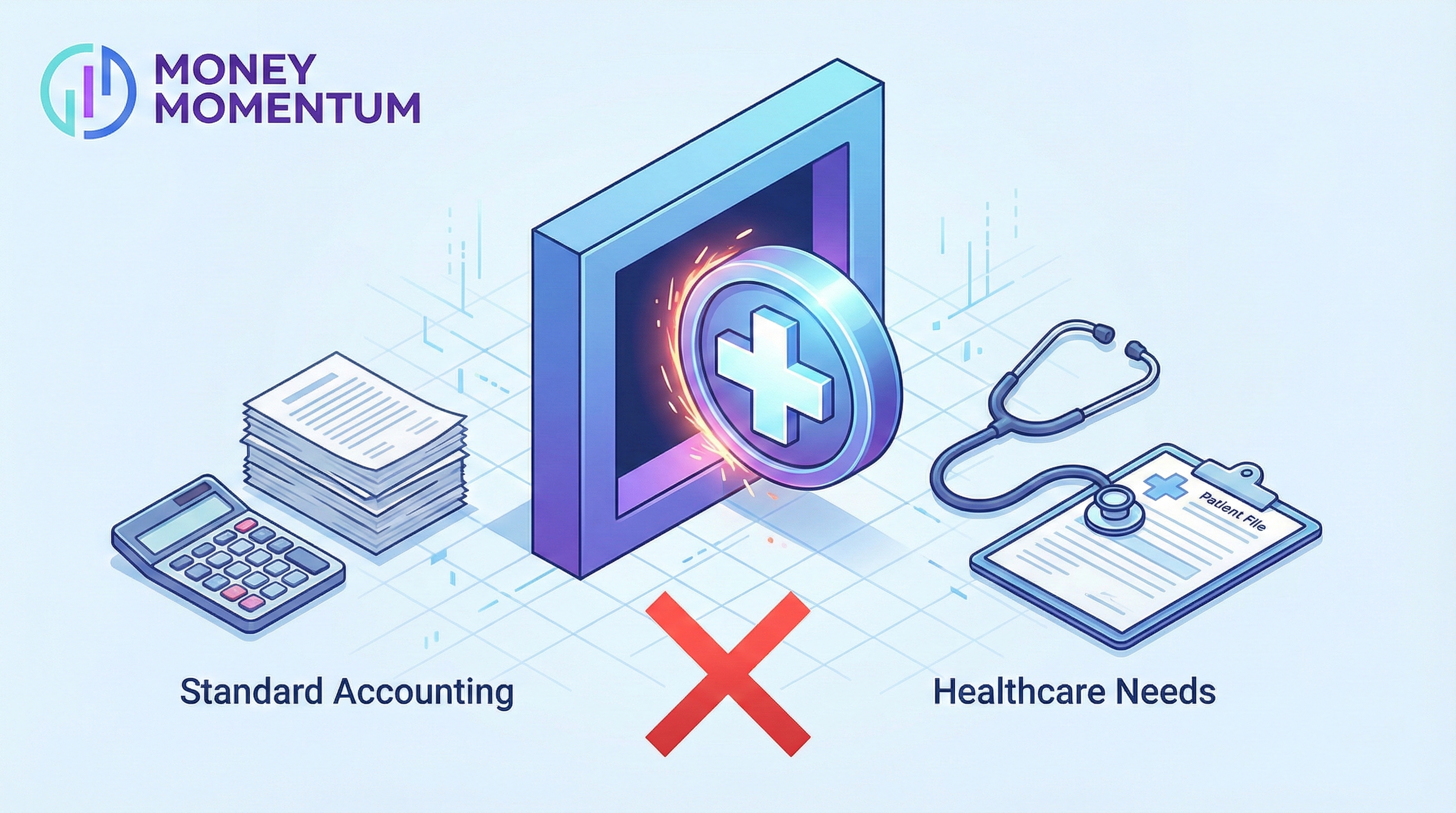
Generic accountants often view a medical practice as just another business. However, healthcare operates under a unique set of rules involving clinical governance, strict compliance, and distinct revenue streams.
The Operational Friction:
- Dual Revenue Streams: Managing the disparity between steady NHS reimbursements and variable private fees.
- Regulatory Scrutiny: Ensuring compliance with the General Medical Council (GMC) and Care Quality Commission (CQC) regarding financial transparency.
- Partnership Structures: Navigating the complexities of partnership agreements, which differ significantly from standard limited companies.
As noted in our core philosophy, we move beyond basic bookkeeping to address the specific administrative burden of patient care vs. financial management.
2. Navigating NHS Pension Scheme Complexities

The NHS Pension Scheme is one of the most valuable benefits for clinicians, but it is also a source of significant administrative headaches and tax liabilities.
Key Challenges:
- Annual Allowance Traps: High earners often trigger tax charges when their pension growth exceeds the annual allowance.
- Input Periods: Understanding the specific input periods for pension contributions to maximize tax efficiency.
- Administrative Burden: The paperwork required to report pension inputs can consume hours that should be spent on patient care.
Our specialist service helps you forecast these liabilities, ensuring you don’t receive an unexpected tax bill from HMRC years down the line.
3. Capital Allowances on Medical Equipment
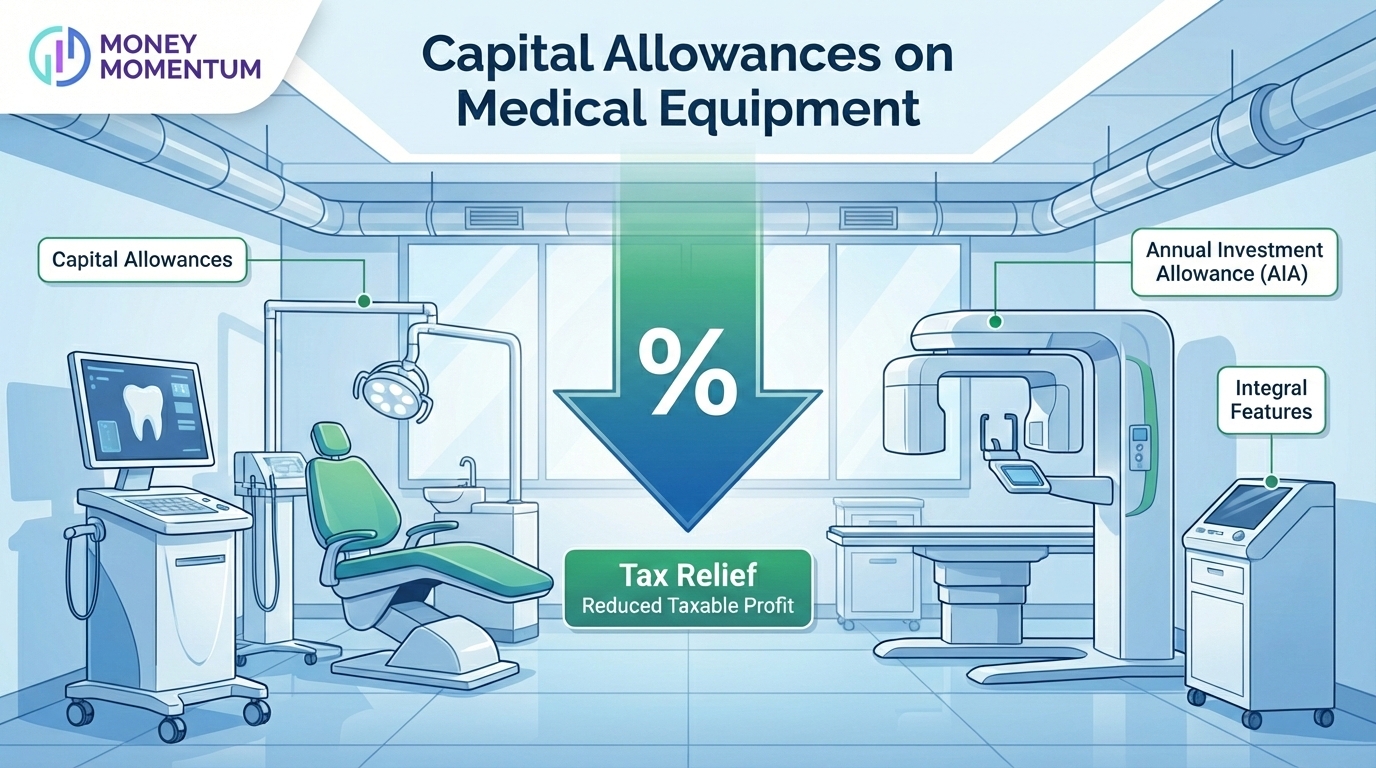
Investing in state-of-the-art medical technology—such as digital X-ray machines, CAD/CAM systems for dentistry, or surgical lasers—represents a massive capital outlay.
Maximizing Relief:
- Plant and Machinery: Ensuring that qualifying medical equipment is correctly classified for capital allowances.
- The Annual Investment Allowance (AIA): Structuring purchases to maximize immediate relief where applicable.
- Integral Features: Identifying qualifying features within your practice premises (e.g., specialist ventilation or lighting) that are often overlooked.
By optimizing these deductions, we ensure your capital investment works as hard as you do to reduce your taxable profits.
4. Private Healthcare Cash Flow Management

Cash flow in private healthcare can be volatile. Unlike the predictable monthly NHS reimbursements, private fees depend on patient bookings, insurance claim processing times, and bad debt management.
Strategic Management:
- Revenue Cycle Optimization: Shortening the gap between treatment and payment.
- Bad Debt Provision: Accurately forecasting and writing off unrecoverable fees to present a true picture of profitability.
- Tax Planning: Setting aside the correct amount of Corporation Tax or Income Tax based on actual cash received versus accrued revenue.
This proactive approach prevents the ‘boom and bust’ cycle many private practices experience.
6. Dental Practice Profit Optimization
Dental practices sit at the intersection of clinical artistry and high-volume business. With the transition away from UDAs (Unit of Dental Activity) towards a more contract-based model for NHS dentists, profit optimization requires sharp strategic oversight.
Levers for Profitability:
- Lab Costs & Materials: Rigorous tracking of Cost of Goods Sold (COGS) to ensure margins aren’t eroding.
- Associate vs. Owner: Structuring associate agreements and profit distributions to be tax-efficient.
- Tiered Pricing Models: Implementing effective pricing strategies for private treatments to increase average transaction value.
We help dental practice owners shift their focus from ‘doing the books’ to analyzing key performance indicators that drive growth.
Conclusion
Financial clarity is the bedrock of a thriving healthcare practice. By outsourcing your accounting to specialists who understand the nuances of NHS pensions, capital allowances, and dental profit optimization, you reclaim the time and mental space needed for what matters most: patient outcomes.
If you are ready to streamline your financial administration and minimize your tax liabilities, partner with a firm that understands the healthcare sector inside and out.