
This is one of the most common questions we hear.
And it usually comes with a lot of noise attached.
“Everyone says go limited.”
“My mate said it saves tax.”
“I read online that sole traders pay loads more.”
Here’s the truth:
There is no automatic right answer.
There’s only the right answer for where you are right now.
Let’s break this down properly, without guessing and without hype.
Why this decision actually matters
Choosing between being a sole trader and running a limited company isn’t just a box-ticking exercise.
It affects:
-
How much tax you pay
-
How and when you can take money out
-
Your admin and reporting responsibilities
-
Your personal risk
-
How “grown up” your business needs to be
Get it right, and things feel simple and controlled.
Get it wrong, and you’re either overpaying tax or drowning in admin you don’t need.
First, what a sole trader really is (in plain English)
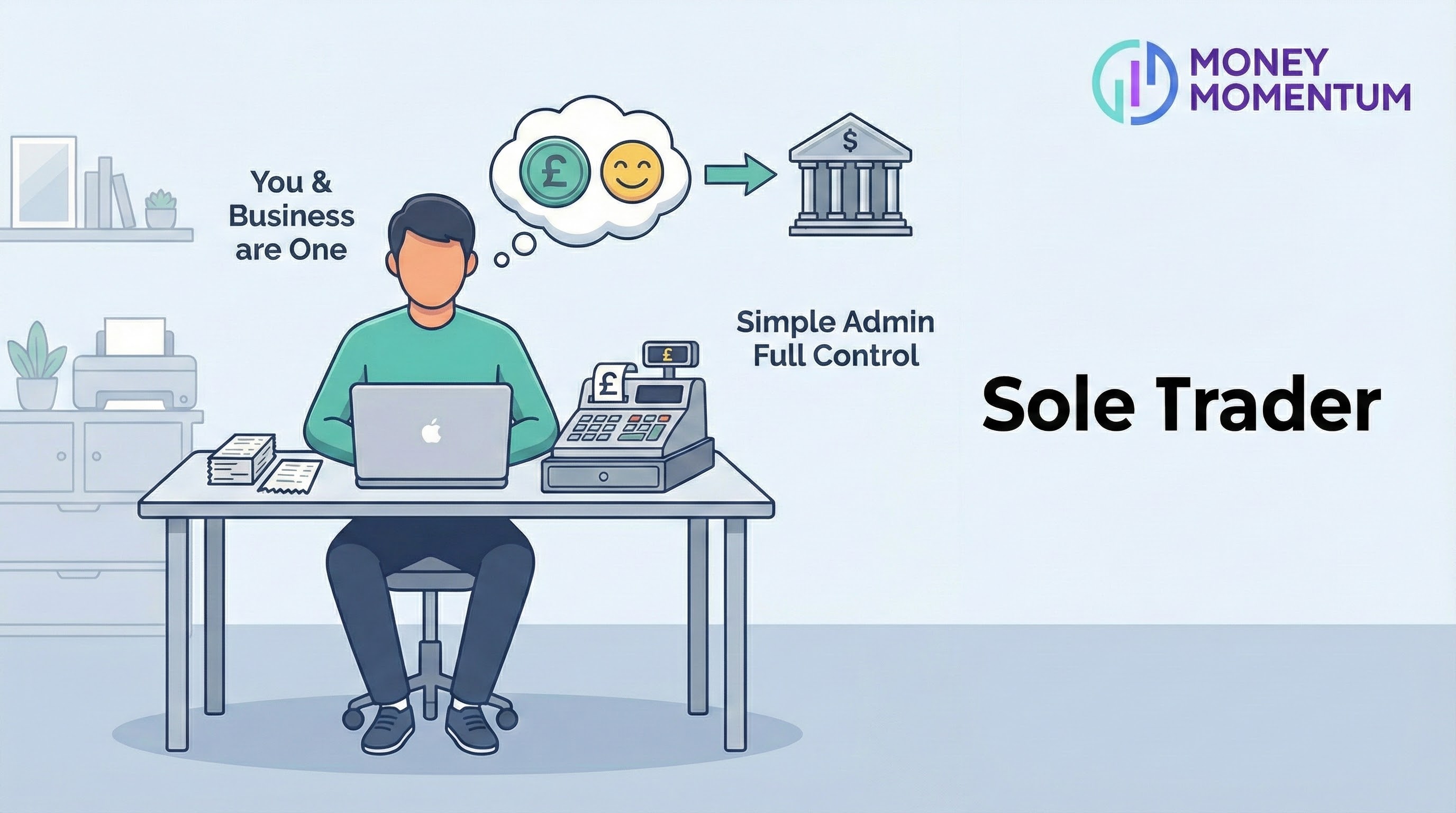
As a sole trader:
-
You and the business are the same thing
-
All profits are treated as your personal income
-
You pay Income Tax and National Insurance on those profits
-
Admin is relatively simple
-
You keep full control
It’s often the cleanest way to start, especially if:
-
Your income is modest or inconsistent
-
You’re testing an idea
-
You want minimal admin
-
You’re just getting going
There’s nothing “small” or unprofessional about being a sole trader. Plenty of very profitable people stay this way for years.
What running a limited company actually changes
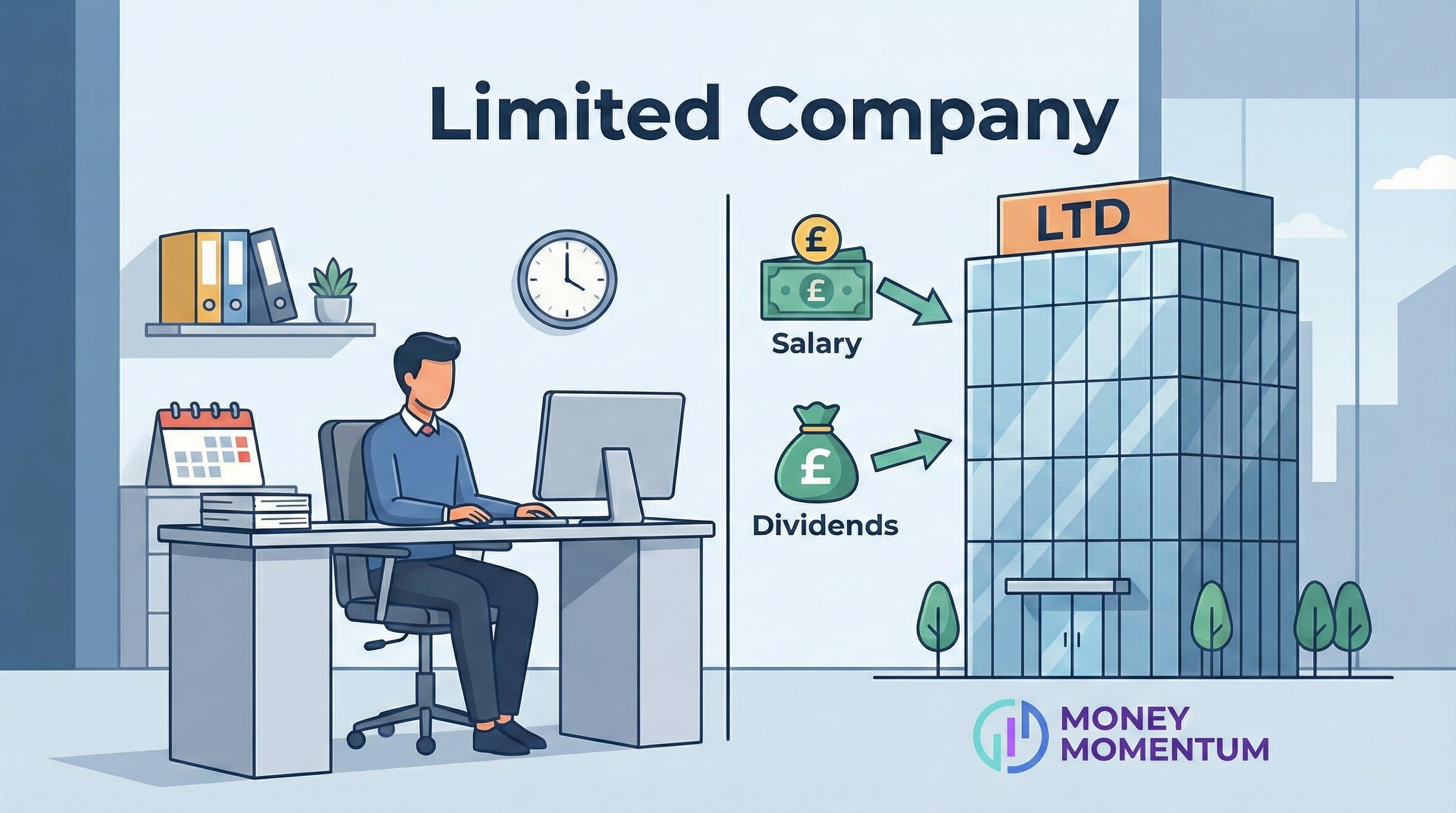
A limited company is a separate legal entity.
That sounds formal, but here’s what it really means day to day.
-
The company earns the money, not you
-
The company pays Corporation Tax on its profits
-
You take money out via salary and dividends
-
There are more rules, reports and deadlines
-
You get more flexibility with tax planning
-
Your personal liability is usually reduced
A limited company gives you more levers to pull, but also more responsibility.
The biggest myth: “Limited company always saves tax”
This is where most people get it wrong.
A limited company can be more tax efficient, but only when:
-
Your profits are high enough
-
You’re structured properly
-
You’re disciplined with how you take money
-
You understand the rules
If your profits are low or inconsistent, a limited company can:
-
Cost more in accountancy fees
-
Add admin stress
-
Create complexity without real benefit
Tax efficiency comes from numbers, not from structure alone.
The questions that actually decide this properly
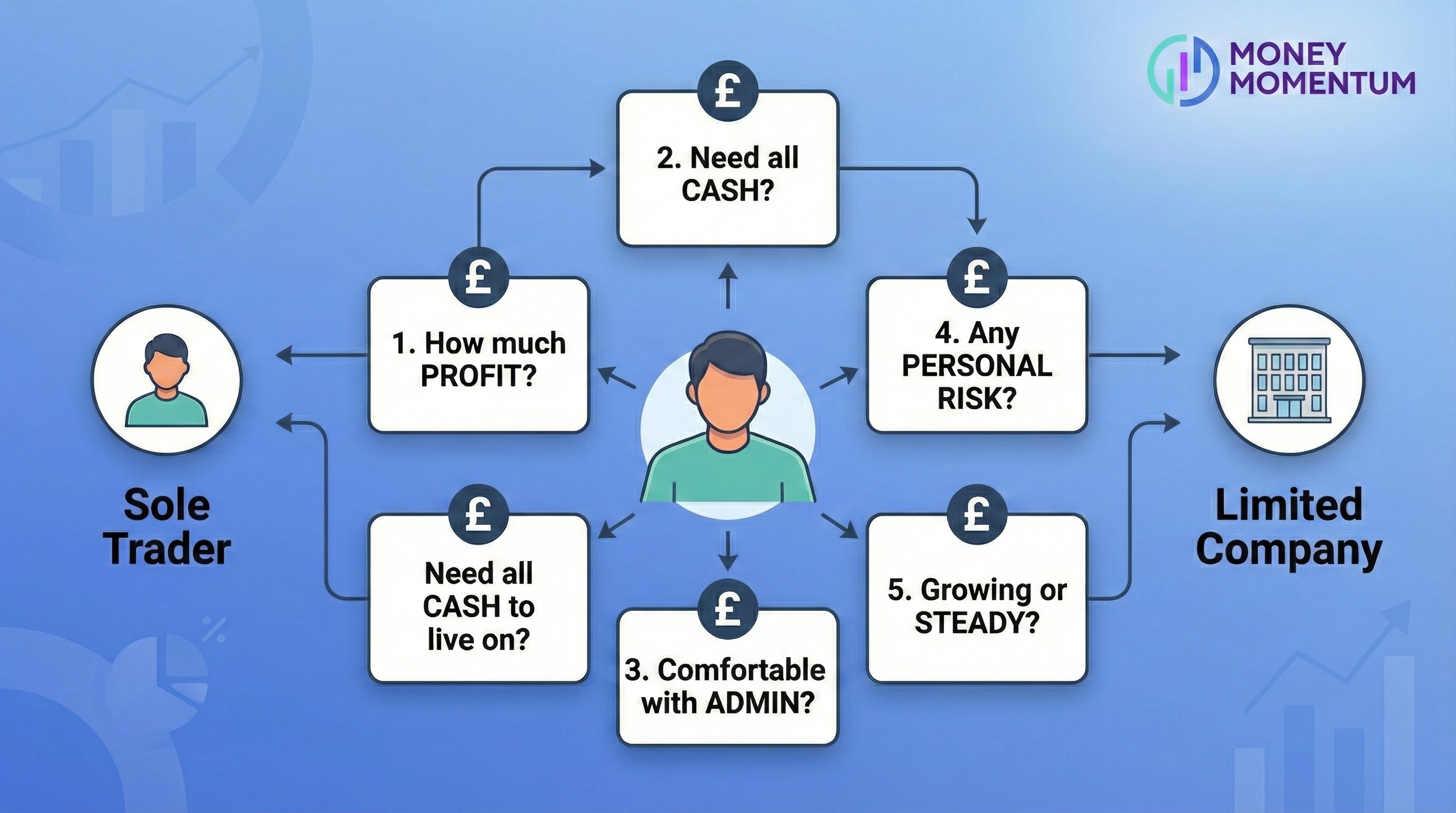
Instead of guessing, here’s what we look at with clients.
1. How much profit are you actually making?
Not turnover.
Not what you hope to make.
Real, sustainable profit.
This is usually the biggest factor.
2. Do you need all the money to live on?
If you take out every pound you earn, the benefits of a limited company are often smaller.
Limited companies shine when:
-
You can leave money in the business
-
You don’t need to withdraw everything immediately
3. How comfortable are you with admin?
Companies House filings
Payroll
Dividends
Confirmation statements
None of this is scary, but it does require organisation.
4. Is there any personal risk in what you do?
Some professions benefit from the extra separation a company provides. Others don’t need it at all.
5. Are you growing, or staying steady?
If growth is coming, planning ahead matters.
If things are steady and predictable, simplicity might win.
What usually works in real life
What we see most often is this:
-
People start as sole traders
-
They build consistent income
-
Profits rise
-
Then they move to a limited company when the numbers justify it
There’s no prize for going limited early.
There is a cost for doing it for the wrong reasons.
Common mistakes we see all the time
-
Going limited because “everyone else is”
-
Switching without running the numbers
-
Copying advice from people in completely different industries
-
Thinking structure alone equals tax savings
-
Not reviewing the decision as income grows
Your structure should evolve with your business. It’s not a one-time, forever choice.
So how do you decide without guessing?
You don’t guess.
You look at:
-
Your profits
-
Your cash needs
-
Your growth plans
-
Your tolerance for admin
-
Your personal situation
Then you decide calmly, based on facts.
This isn’t about being clever.
It’s about being appropriate for where you are right now.
Final thought
If you’re lying awake wondering whether you’ve chosen the wrong structure, that’s usually a sign you need clarity, not complexity.
When this decision is explained properly, it becomes obvious.
And once it’s obvious, everything else feels lighter.