
This is one of those things nobody explains clearly.
People either:
-
Take money whenever they need it
-
Copy what a friend does
-
Or hope their accountant “sorts it later”
That’s how confusion, tax surprises and stress creep in.
Paying yourself properly isn’t about being clever.
It’s about being deliberate.
Let’s walk through it properly.
First, it depends on how your business is set up
How you pay yourself depends entirely on whether you’re:
-
A sole trader
-
Or running a limited company
The rules are very different, and mixing them up causes most problems.
If you’re a sole trader
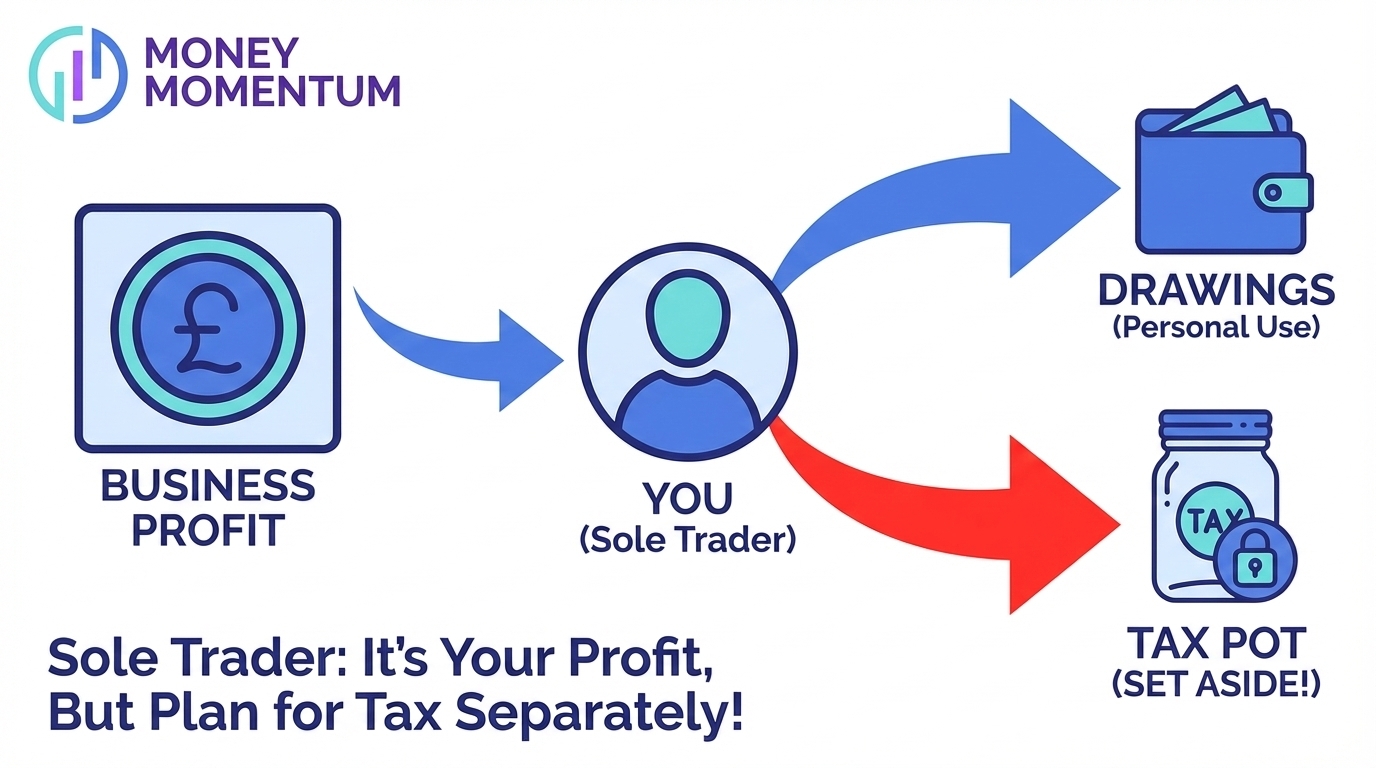
As a sole trader, there is no “salary”.
The business profits belong to you.
That means:
-
You can take money out whenever you want
-
These withdrawals are called drawings
-
They are not an expense
-
They don’t reduce your tax bill
You’re taxed on profit, not on what you take out.
This is where people get caught out.
Taking less money out doesn’t mean less tax.
The real risk for sole traders
The risk isn’t over-withdrawing.
It’s forgetting that tax still needs to be paid.
Many sole traders feel fine month-to-month, then panic when the tax bill arrives.
The solution isn’t restricting drawings.
It’s planning for tax separately.
If you run a limited company
This is where structure matters more.
A limited company is separate from you.
You can’t just take money whenever you feel like it.
There are three common ways directors get paid:
-
Salary
-
Dividends
-
Reimbursement of expenses
Each one has rules, timing and tax implications.
Salary: steady but taxed differently
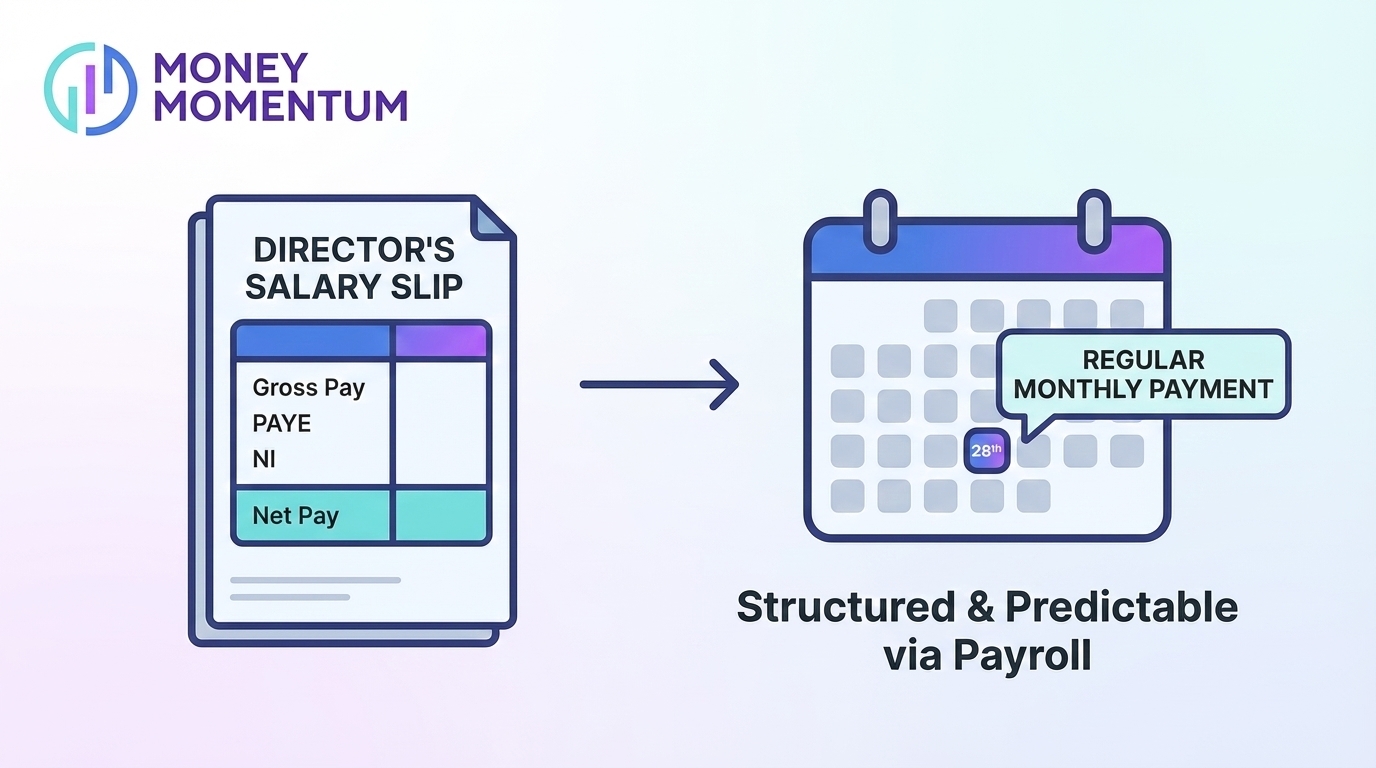
Salary:
-
Is paid through payroll
-
Is taxed as income
-
Counts towards National Insurance and pension records
Many directors pay a modest, regular salary.
Not because it’s exciting.
But because it provides structure and predictability.
Dividends: flexible but conditional
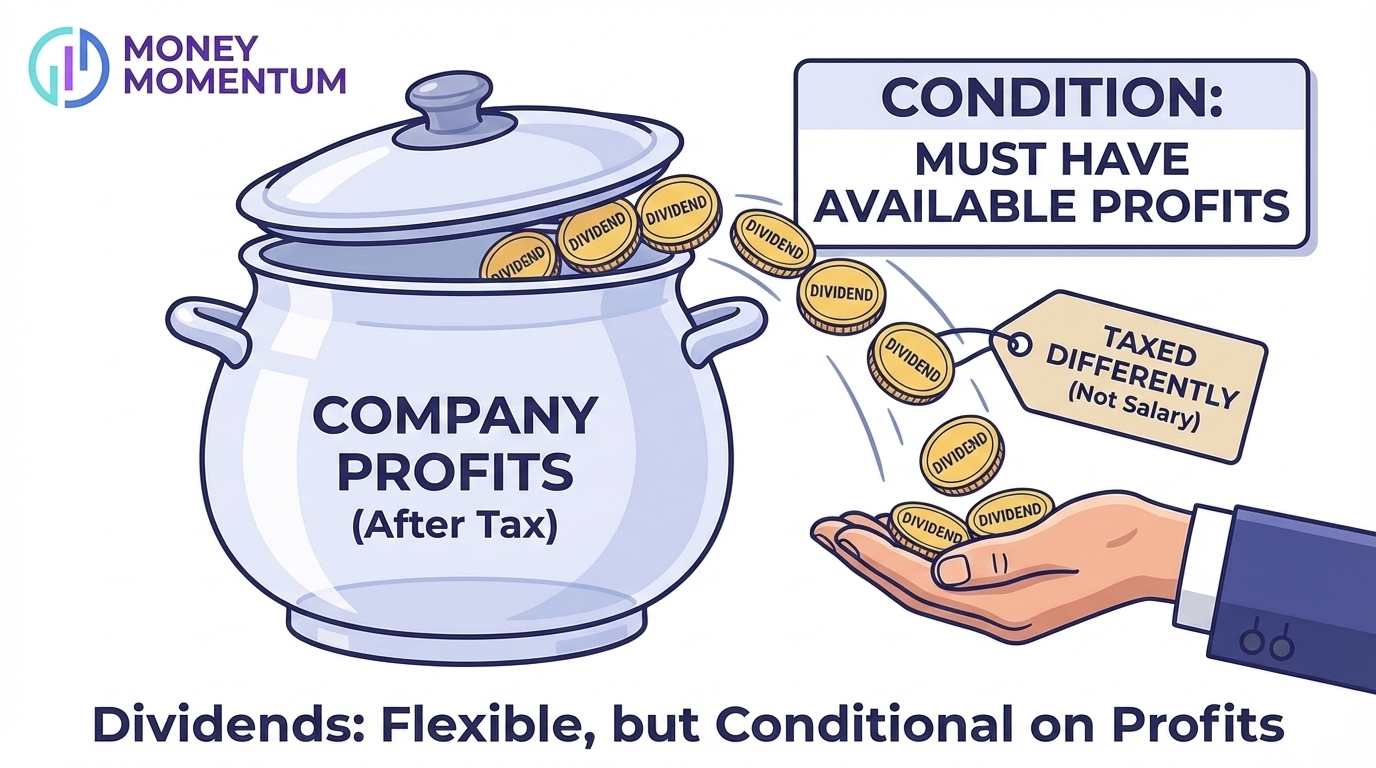
Dividends:
-
Come from company profits
-
Can only be paid if profits exist
-
Are declared, not guessed
-
Are taxed differently from salary
Dividends are often where tax efficiency comes in.
But only when profits, timing and records are handled properly.
The biggest mistake directors make
Treating the company bank account like a personal one.
This leads to:
-
Overdrawn director loan accounts
-
Unexpected tax bills
-
Complicated clean-up work later
Once things get messy, stress follows quickly.
What “properly” actually means
Paying yourself properly means:
-
Knowing what you’re taking and why
-
Understanding the tax impact before you take it
-
Keeping personal and business money separate
-
Planning, not reacting
It’s less about optimisation.
More about clarity.
A simple principle that keeps things clean
Before taking money out, ask:
“Is this salary, dividend, or expense reimbursement?”
If you can’t answer that, pause.
That one question avoids most problems.
Final thought
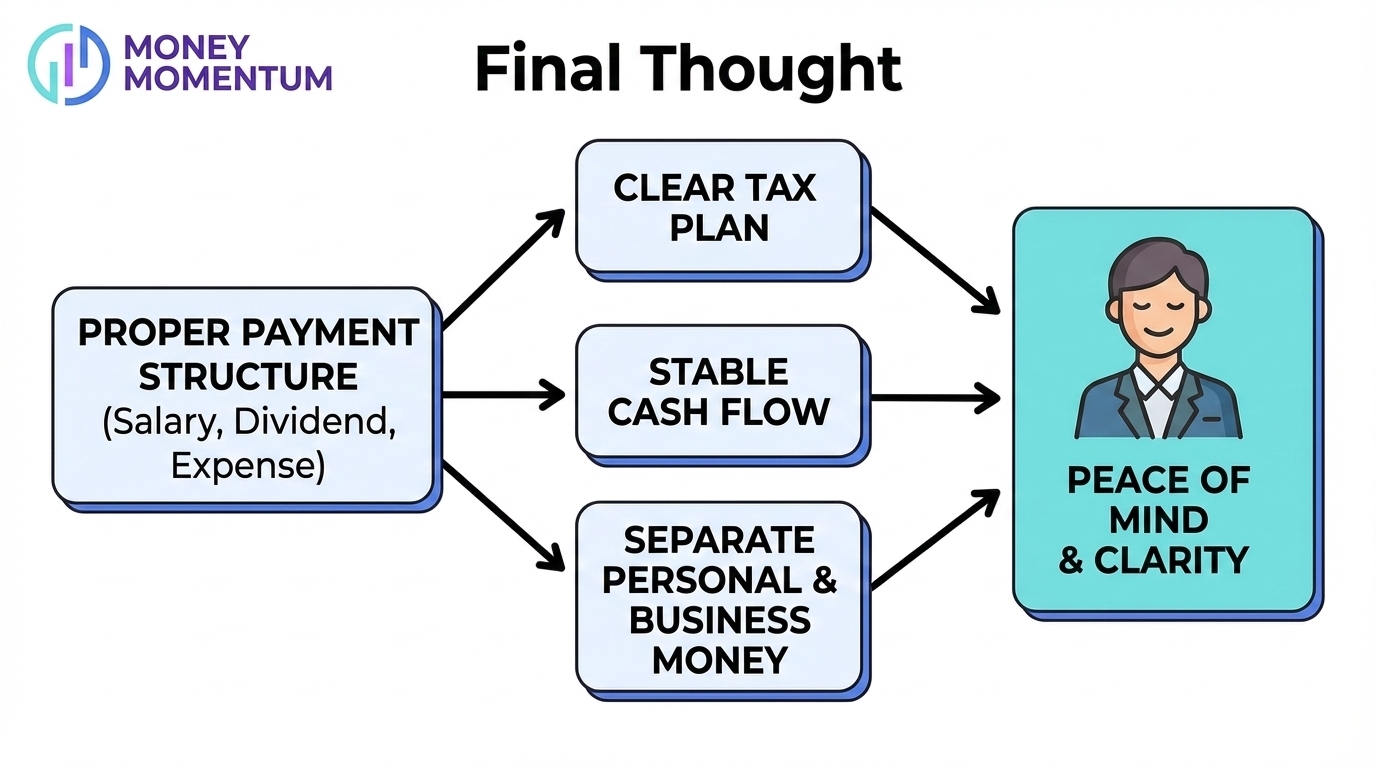
How you pay yourself affects:
-
Your tax
-
Your cash flow
-
Your peace of mind
Once it’s set up properly, it becomes boring.
And boring is exactly what you want when it comes to money.