
Key Takeaways
- Seasonal businesses need data-driven cash reserve targets, not arbitrary rules of thumb
- A 20% cash buffer typically covers 60+ days of operating expenses for most seasonal businesses
- Automated forecasting tools like Xero improve accuracy but require human oversight and interpretation
- Scenario planning should address both supply chain disruptions and market changes
- Building resilience is a gradual process that requires consistent allocation and regular review
Introduction
Seasonal businesses face a unique financial challenge that many accounting guides fail to address adequately. While your revenue might surge during peak months, the slower periods can create dangerous cash flow gaps that threaten your entire operation. This isn’t just about having enough money in the bank – it’s about building genuine financial resilience that allows your business to weather unexpected storms while maintaining operational stability year-round.
The traditional approach of ‘saving what you can’ during busy periods often falls short because it lacks strategic planning and data-driven decision-making. Many seasonal business owners discover too late that their cash reserves aren’t sufficient when multiple challenges hit simultaneously – perhaps a delayed payment coincides with an unexpected equipment repair during your slowest month.
This guide provides a comprehensive framework for building financial resilience specifically designed for seasonal SMEs. We’ll move beyond generic advice to deliver actionable strategies that account for your unique revenue patterns, risk profile, and operational needs. Whether you’re a roofing contractor facing winter slowdowns, a creative agency with project-based income fluctuations, or any other seasonal business, you’ll find practical tools and insights to strengthen your financial foundation.
Understanding Seasonal Revenue Patterns and Cash Flow Challenges
The first step in building financial resilience is understanding your specific seasonal patterns. Many business owners assume they know their revenue cycles, but without proper analysis, you’re likely missing crucial insights that could inform your planning.
Start by mapping your revenue over the past 24-36 months, breaking it down by month. Look for patterns beyond the obvious peaks and troughs. Do you notice:
- Gradual ramp-up periods vs. sudden spikes?
- Consistent slow months or irregular patterns?
- Correlation between your cycles and broader market trends?
- Impact of external factors like weather, holidays, or economic conditions?
Many seasonal businesses make the mistake of focusing solely on revenue timing while ignoring the lag between when work is done and when payment is received. A roofing contractor might book most jobs in summer but receive payment terms of 30-60 days, creating a significant cash flow gap.
Fixed costs present another challenge. Your rent, insurance, software subscriptions, and minimum staffing levels don’t adjust with your revenue. During slow periods, these fixed costs consume a larger percentage of your reduced income, accelerating cash burn.
Understanding these patterns isn’t about predicting the future perfectly – it’s about recognizing the range of scenarios you might face and preparing accordingly. The businesses that survive unexpected disruptions aren’t necessarily the ones with the most cash; they’re the ones who understand their financial patterns well enough to make informed decisions quickly.
https://youtube.com/watch?v=WEJYOUve3Mg
Calculating Your Contingency Cash Reserve Targets
Once you understand your seasonal patterns, you need concrete targets for your cash reserves. The common advice of ‘keep three months of expenses’ often proves insufficient for seasonal businesses, where a single slow quarter can deplete reserves faster than anticipated.
Here’s a more nuanced approach to calculating your contingency targets:
Step 1: Identify Your Critical Fixed Costs
List every expense you must pay regardless of revenue, including:
- Rent or mortgage payments
- Insurance premiums
- Essential software and subscriptions
- Minimum staffing costs
- Debt service payments
- Utilities and basic services
Step 2: Calculate Your Risk Exposure
Determine your longest historical period between revenue peaks. For most seasonal businesses, this ranges from 3-6 months, but some industries face longer gaps.
Step 3: Apply the Resilience Formula
Target Cash Reserve = (Monthly Fixed Costs × Longest Low-Revenue Period) + (Monthly Variable Costs × Risk Buffer)
For example, a roofing contractor with:
- Monthly fixed costs: £8,000
- Longest slow period: 5 months
- Monthly variable costs during slow periods: £3,000
- Risk buffer (additional 20%): £2,200
Target Reserve = (£8,000 × 5) + (£3,000 × 5 × 1.2) = £40,000 + £18,000 = £58,000
This might seem like a substantial amount, but consider what happens if your slow season extends an extra month or if you face unexpected equipment repairs during that period. The goal isn’t to hoard cash unnecessarily but to ensure you can maintain operations through realistic worst-case scenarios.
Building Your Reserve Strategically
Rather than trying to accumulate your full target immediately, create a tiered approach:
- Emergency tier (£5,000-£10,000): Covers immediate unexpected expenses
- Operational tier (3 months fixed costs): Maintains basic operations through typical slow periods
- Resilience tier (full target): Provides comprehensive protection against extended disruptions
Allocate a percentage of peak season revenue to each tier systematically. Even small, consistent contributions build significant resilience over time.
Scenario Planning for Supply Chain and Market Disruptions
Financial resilience isn’t just about having cash reserves – it’s about anticipating and preparing for various disruption scenarios. Seasonal businesses face unique risks because their concentrated revenue periods make them vulnerable to even minor disruptions.
Common Disruption Scenarios for Seasonal Businesses:
- Supply Chain Delays: A roofing contractor might face material shortages just as demand peaks, forcing them to pay premium prices or turn away business.
- Labor Shortages: Seasonal businesses often rely on temporary or contract workers. A sudden shortage during peak periods can severely impact revenue.
- Payment Delays: Customers might extend payment terms during economic uncertainty, creating cash flow gaps even when revenue appears healthy.
- Weather or Market Disruptions: External factors can compress your operating window, forcing you to generate a season’s revenue in a shorter timeframe.
Creating Your Scenario Response Plan:
Step 1: Risk Assessment
List potential disruptions ranked by:
- Likelihood of occurrence
- Potential financial impact
- Speed of onset (gradual vs. sudden)
Step 2: Response Strategies
For each high-impact scenario, develop specific response strategies:
- Immediate actions (first 48 hours)
- Short-term adjustments (2-4 weeks)
- Long-term adaptations (beyond one month)
Step 3: Financial Triggers
Define specific financial indicators that signal when to activate each response:
- Cash balance thresholds
- Accounts receivable aging levels
- Credit line utilization rates
- Revenue per day metrics
Step 4: Regular Testing
Review and update your scenarios quarterly. Test your response plans through tabletop exercises with your team. The goal isn’t to predict every possible disruption but to build adaptive capacity that allows you to respond effectively to whatever challenges arise.
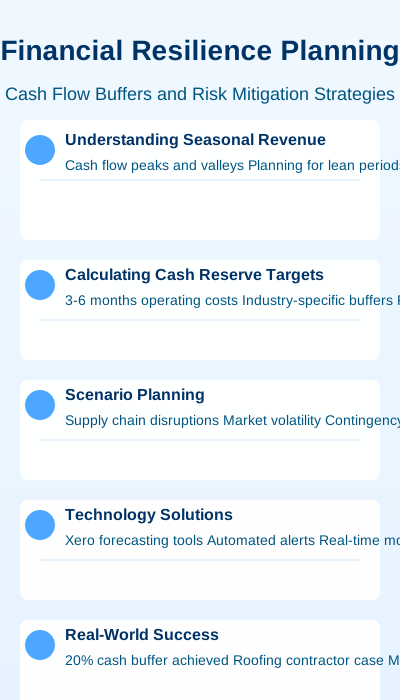
Leveraging Technology: Xero’s Cash Flow Forecasting Tools
While manual planning provides valuable insights, automated tools can significantly enhance your forecasting accuracy and reduce the administrative burden. Xero’s cash flow forecasting module offers several features particularly valuable for seasonal businesses.
Key Features for Seasonal Businesses:
- Pattern Recognition: Xero analyzes your historical data to identify seasonal patterns automatically, even when they’re not immediately obvious. This helps validate your manual analysis and might reveal trends you’ve overlooked.
- Scenario Modeling: Create multiple forecast scenarios based on different assumptions about revenue timing, payment delays, and expense patterns. This allows you to stress-test your resilience plans against various outcomes.
- Automated Updates: Connect your bank feeds and invoice data to keep forecasts current without manual data entry. This ensures your planning always reflects your latest financial position.
- Custom Categories: Set up custom categories for fixed vs. variable costs, seasonal expenses, and contingency reserves to track how different expense types impact your cash position.
Getting Started with Xero Forecasting:
Step 1: Data Preparation
Ensure your historical data is clean and complete. Xero’s accuracy depends on having at least 12-24 months of reliable transaction data.
Step 2: Configure Categories
Set up your chart of accounts to reflect your seasonal patterns. Create separate categories for peak season vs. slow season expenses where appropriate.
Step 3: Establish Baselines
Use Xero’s pattern recognition to establish baseline forecasts, then adjust based on your specific knowledge of upcoming factors (new contracts, market changes, etc.).
Step 4: Regular Review
Schedule weekly reviews of your forecasts during peak seasons and monthly during slow periods. Update assumptions based on actual results and emerging trends.
Limitations to Understand:
While Xero’s tools are powerful, they work best as supplements to human judgment rather than replacements. The software might not account for:
- Upcoming contract renewals or expirations
- Planned equipment purchases or replacements
- Changes in your business model or target markets
- Industry-specific seasonal factors
Use the technology to handle routine calculations and pattern recognition, freeing your time to focus on strategic decisions that require human insight.
Real-World Success: How a Roofing Contractor Achieved 20% Cash Buffer
To illustrate these principles in action, consider the case of Smith & Sons Roofing, a medium-sized contractor serving residential and commercial clients in the Midlands. Like many seasonal businesses, they struggled with cash flow gaps that forced them to delay equipment purchases and sometimes turn away work during their peak season.
The Challenge:
Smith & Sons had been in business for 15 years but operated reactively rather than proactively. Their revenue pattern was clear – 70% of annual revenue came between April and September – but their cash reserves were consistently depleted by December, forcing them to operate on credit through the winter months.
The Solution:
Working with Money Momentum, they implemented a comprehensive resilience plan:
- Data Analysis: They mapped three years of financial data, revealing that their actual cash conversion cycle was 45 days longer than they’d assumed. This meant they needed significantly more working capital than they’d planned.
- Target Setting: Based on their analysis, they set a target cash buffer of 20% of annual revenue (£120,000), broken into the three-tier system described earlier.
- Technology Implementation: They implemented Xero’s forecasting tools and integrated them with their project management software to track revenue recognition more accurately.
- Scenario Planning: They developed response plans for three scenarios: mild slowdown (revenue 20% below forecast), severe disruption (revenue 40% below forecast), and extended disruption (revenue 20% below forecast for consecutive years).
The Results:
- Month 6: Reached their emergency tier (£8,000) and avoided a £15,000 equipment repair financing charge
- Month 12: Achieved operational tier (3 months fixed costs) and negotiated 10% better terms with key suppliers due to improved payment reliability
- Month 18: Hit their full 20% target (£120,000) and invested in energy-efficient equipment that reduced annual operating costs by £15,000
- Year 2: Maintained buffer through a severe weather disruption that reduced peak season revenue by 25%
Key Success Factors:
- Consistent Allocation: They automatically allocated 15% of each invoice to their cash reserve account
- Regular Review: Weekly forecast reviews during peak season, monthly during slow periods
- Team Involvement: All project managers understood the cash flow targets and could make informed decisions about project timing and resource allocation
The Outcome:
Smith & Sons not only survived a challenging market period but used their improved financial position to invest in growth. They expanded their service area by 30% and increased their average project size by 25% without taking on additional debt.
This case demonstrates that building financial resilience isn’t about restricting growth – it’s about creating a stable foundation that supports sustainable expansion. The 20% buffer provided both protection and flexibility, allowing them to capitalize on opportunities that less prepared competitors had to pass up.
Conclusion
Building financial resilience for your seasonal business isn’t a one-time project – it’s an ongoing process of understanding your patterns, setting appropriate targets, and maintaining the discipline to stick to your plan even when business is booming. The businesses that thrive through market disruptions aren’t necessarily the largest or most profitable; they’re the ones who’ve invested in building genuine resilience through careful planning and consistent execution.
The framework outlined in this guide provides a starting point, but your specific situation will require customization. Your revenue patterns, risk tolerance, and growth objectives all influence what resilience means for your business. The key is to start somewhere – even small steps toward better cash flow management can significantly reduce your vulnerability to disruptions.
Remember that financial resilience serves a purpose beyond survival. It provides the stability and flexibility to pursue growth opportunities, invest in improvements, and build a business that can withstand whatever challenges the market presents. The peace of mind that comes from knowing you can handle whatever comes your way is often worth more than the financial buffer itself.
If you’re unsure where to start or want to accelerate your progress, consider scheduling a free consultation with our specialist team. We’ve helped businesses across various seasonal industries build resilience plans that work in the real world, not just on paper. Your journey to financial resilience starts with a single step – and the best time to take that step is now.
Food for Thought
If your slow season extended an extra month this year, would you have enough cash to maintain operations without stress?
What’s the smallest cash reserve that would allow you to sleep well at night during your slowest month?
Which potential disruption scenario keeps you up at night, and what specific steps could reduce that anxiety?
How would having 20% more cash reserves change the decisions you’re willing to make about growth and investment?
What financial metric would be the earliest warning sign that you need to activate your contingency plans?
Frequently Asked Questions
How do I calculate cash reserves if I don’t have historical data yet?
For new businesses without historical data, use industry benchmarks and conservative assumptions. Research typical revenue patterns for your industry and location, then assume slower cash conversion than experienced businesses. Start with a minimum of 3 months of fixed costs plus a 25% buffer for unexpected expenses. As you gather actual data, refine your targets quarterly.
What percentage of peak revenue should I allocate to cash reserves?
The optimal percentage depends on your risk tolerance and business model, but most seasonal businesses benefit from allocating 15-25% of peak season revenue to reserves. Start at the lower end if you’re building reserves for the first time, then increase as you become more comfortable with the process. The key is consistency rather than the specific percentage.
Should I keep cash reserves in a separate account or mixed with operating funds?
Keep your cash reserves in a separate, easily accessible account – ideally a high-yield business savings account. This separation creates a psychological barrier against dipping into reserves for non-emergency expenses and makes it easier to track your progress toward targets. However, ensure you can access the funds quickly when genuine emergencies arise.
How often should I review and adjust my cash flow forecasts?
Review your forecasts weekly during peak seasons when small changes can have big impacts, and monthly during slow periods. Conduct a comprehensive review quarterly to adjust your assumptions based on actual results. After any significant disruption or market change, perform an immediate review to ensure your plans remain relevant.
What’s the difference between a cash buffer and an emergency fund?
A cash buffer is designed to manage predictable seasonal fluctuations and maintain operations through normal business cycles. An emergency fund covers truly unexpected events like equipment failure, natural disasters, or global pandemics. Most businesses need both: a buffer for seasonal management and a smaller emergency fund (typically 1-2 months of expenses) for genuine surprises.