
If you’ve missed a tax deadline, the first thing to know is this:
You’re not the first.
And you’re not in immediate trouble.
Most people imagine the worst.
In reality, HMRC is far more structured and predictable than the fear suggests.
Let’s walk through what actually happens, step by step.
First, take a breath
Missing a deadline doesn’t mean:
-
Bailiffs at the door
-
Your business being shut down
-
Instant investigations
What it does mean is that a process starts.
And once you understand that process, the panic usually disappears.
What happens straight away
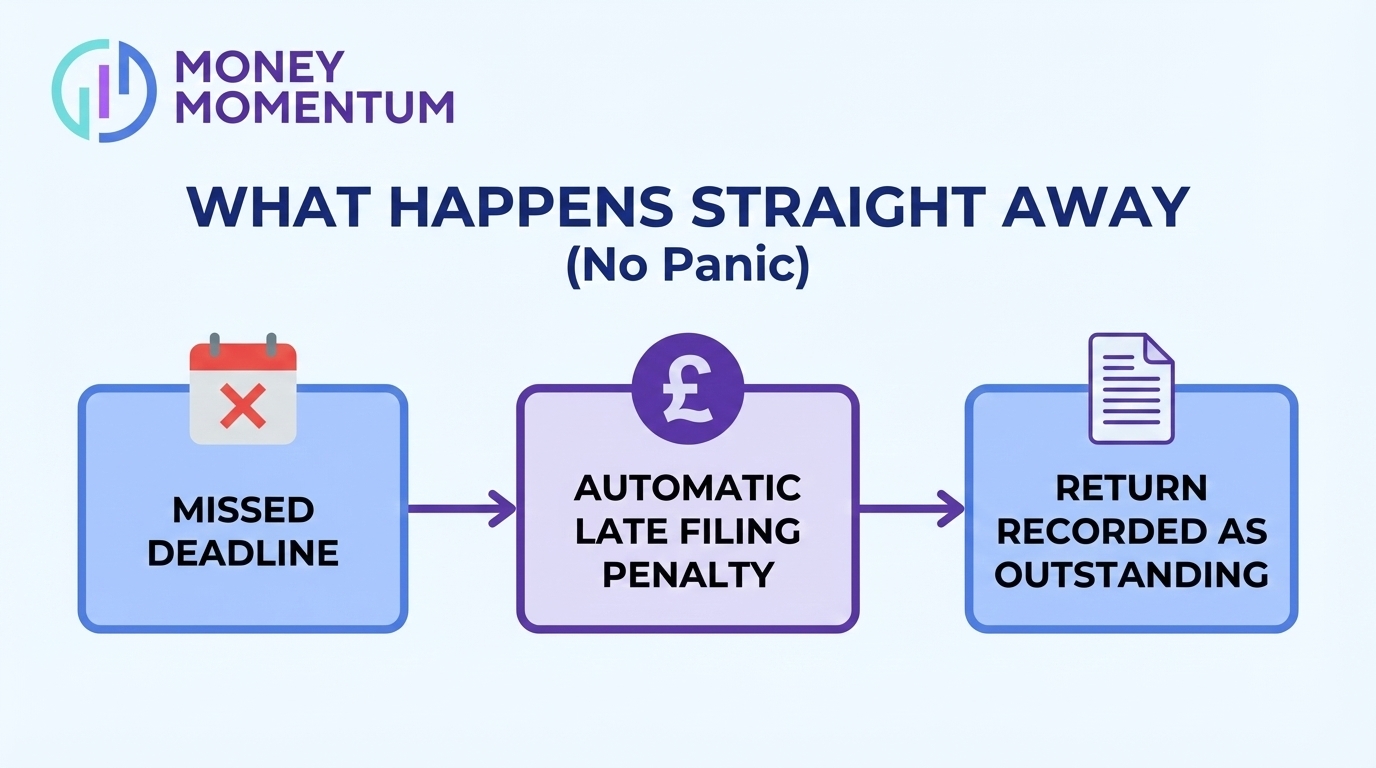
If you miss a filing deadline, HMRC will usually:
-
Apply an automatic late filing penalty
-
Record the return as outstanding
-
Start counting time, not intent
No judgement.
No drama.
Just systems doing what systems do.
Late filing vs late payment (they’re different)
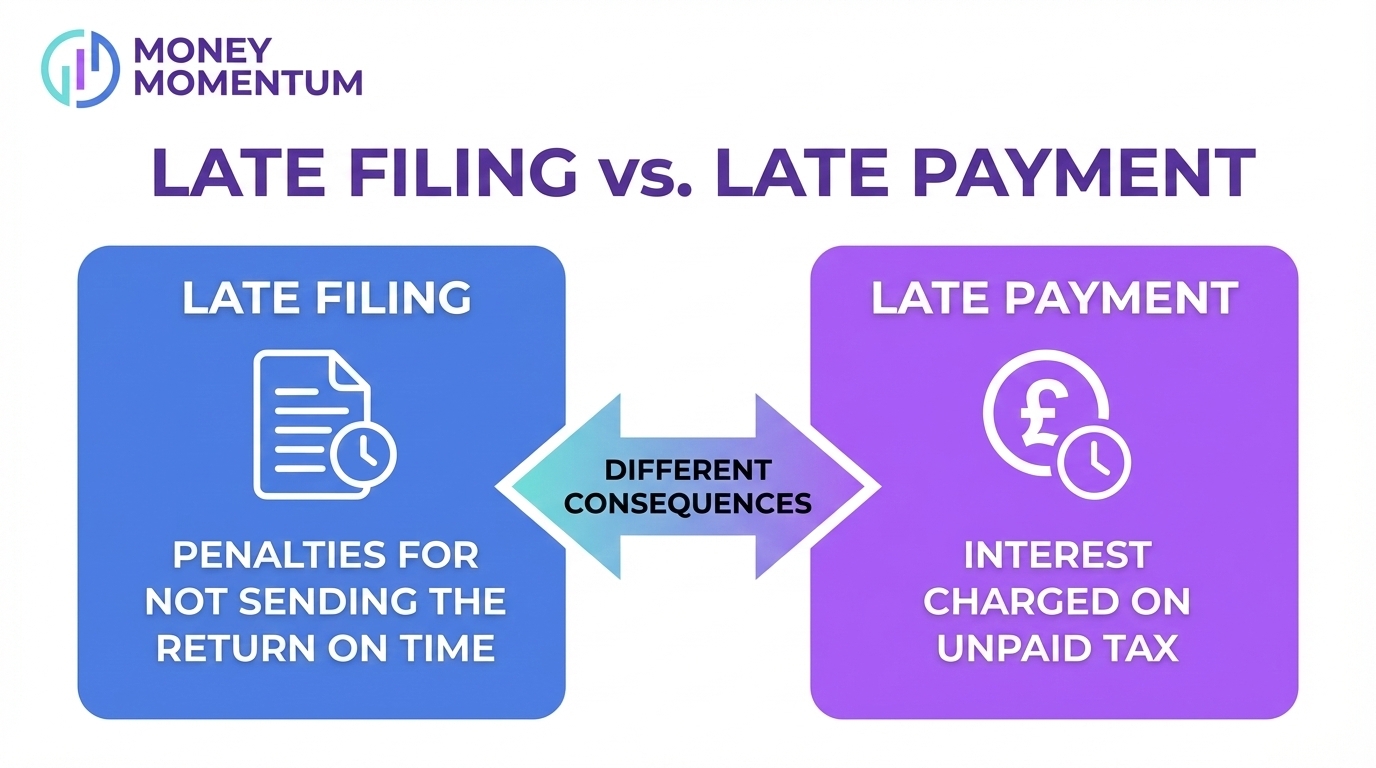
This catches a lot of people out.
You can be:
-
Late filing but paid
-
Filed but late paying
-
Late with both
Each one has different consequences, and mixing them up causes unnecessary stress.
Understanding which applies to you matters.
The penalties in simple terms
For Self Assessment returns, penalties typically work like this:
-
Miss the deadline → automatic initial penalty
-
The longer it stays outstanding, the more penalties can stack up
-
Interest applies to unpaid tax
It’s not instant catastrophe, but it does snowball if ignored.
The biggest mistake people make
Doing nothing.
People delay because:
-
They’re embarrassed
-
They’re overwhelmed
-
They’re afraid to look at it
HMRC reacts far better to action than silence.
Even if you can’t pay immediately, engaging early changes everything.
What HMRC actually wants from you
HMRC isn’t expecting perfection.
They want:
-
The return filed
-
The numbers declared
-
Communication if there’s a problem
Once that happens, options open up.
Before that, nothing moves.
If you can’t pay straight away
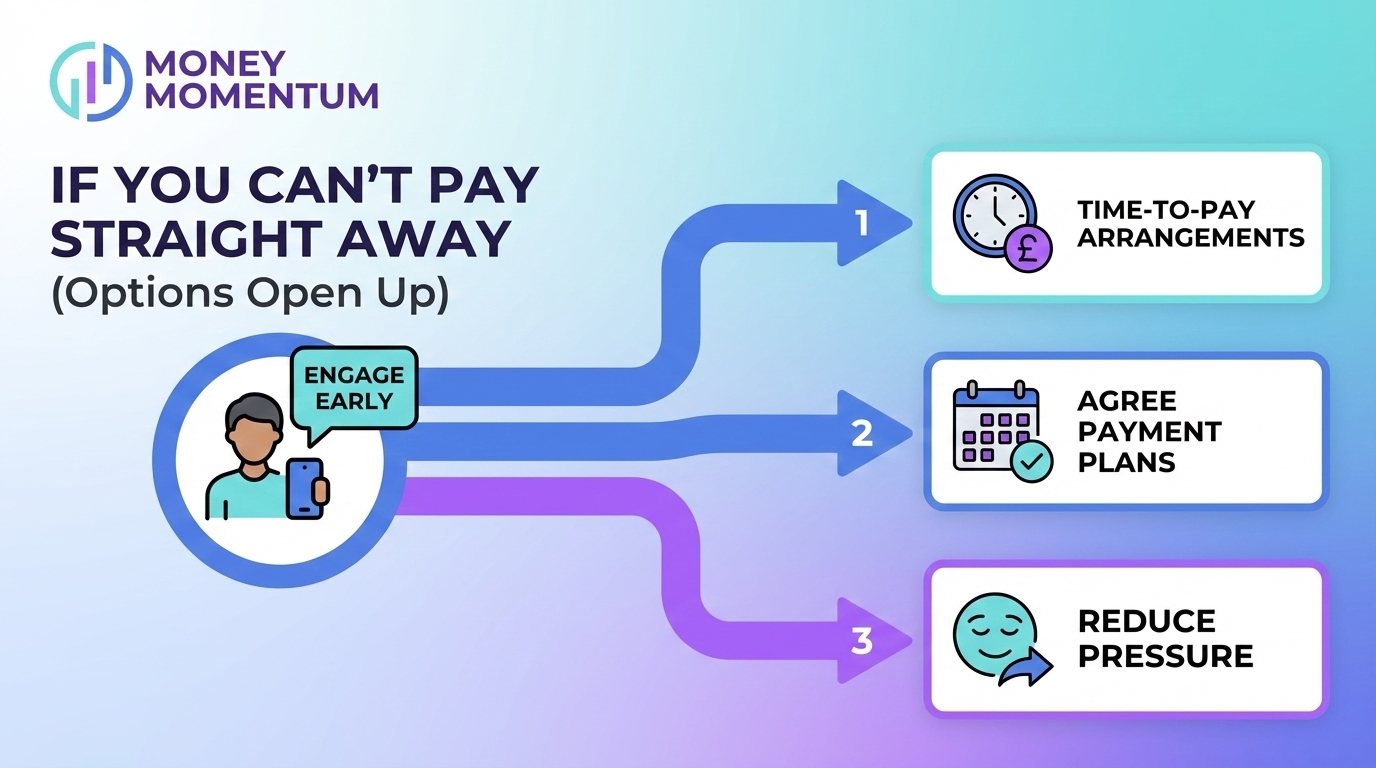
This is more common than people think.
HMRC can:
-
Set up time-to-pay arrangements
-
Agree payment plans
-
Reduce pressure if you’re proactive
Ignoring the problem removes these options.
Why acting early matters
The earlier you act:
-
The fewer penalties accrue
-
The more flexibility you have
-
The less stressful it becomes
Most serious issues come from long periods of avoidance, not one missed deadline.
Final thought
Missing a tax deadline is a problem.
But it’s a manageable one.
What turns it into a nightmare is panic and silence.
Calm action almost always leads to a calm outcome.